
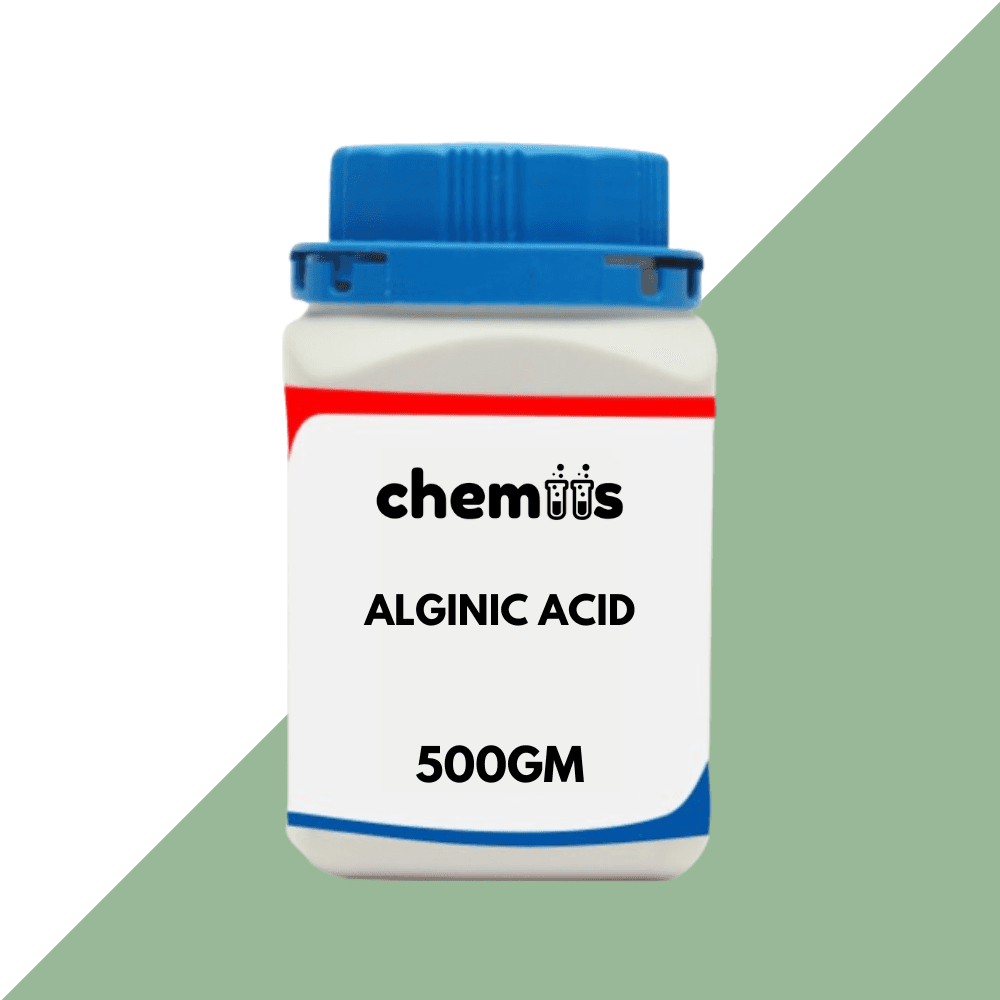
Alginic Acid is a naturally occurring polysaccharide extracted from brown seaweed (Phaeophyceae). This biopolymer is composed of β-D-mannuronic acid (M) and α-L-guluronic acid (G) units, which form a block copolymer. Known for its excellent gelling, thickening, and stabilizing properties, Alginic Acid is widely used in the food industry, pharmaceuticals, and various other applications. Its ability to form viscous gels and hydrophilic colloids makes it a versatile ingredient in numerous formulations.
Applications:
- Food Industry: Alginic Acid is used as a thickening, gelling, and stabilizing agent in a variety of food products, including ice cream, sauces, jellies, and salad dressings. It is also used in the production of edible films and coatings.
- Pharmaceuticals: Employed as an excipient in tablet formulations for its gel-forming properties, which aid in controlled drug release. It is also used in antacid preparations for its ability to form a protective barrier in the stomach.
- Cosmetics: Used in cosmetic formulations for its moisturizing and thickening properties, enhancing the texture and stability of products such as lotions, creams, and masks.
- Biotechnology: Utilized in the encapsulation of cells and enzymes, as well as in the formation of beads and gels for various biotechnological applications.
- Medical Applications: Alginic Acid is used in wound dressings and dental impression materials due to its biocompatibility and gel-forming properties.
Safety and Handling:
Alginic Acid is generally recognized as safe (GRAS) for consumption and use. It should be handled with standard safety practices. Store in a cool, dry place, away from moisture and direct sunlight to maintain its quality and functionality.
Environmental Impact:
Alginic Acid is biodegradable and environmentally friendly. Its production from renewable marine resources ensures sustainability, and it poses no significant environmental risks when used and disposed of properly.

25 reviews for Alginic Acid
There are no reviews yet.