
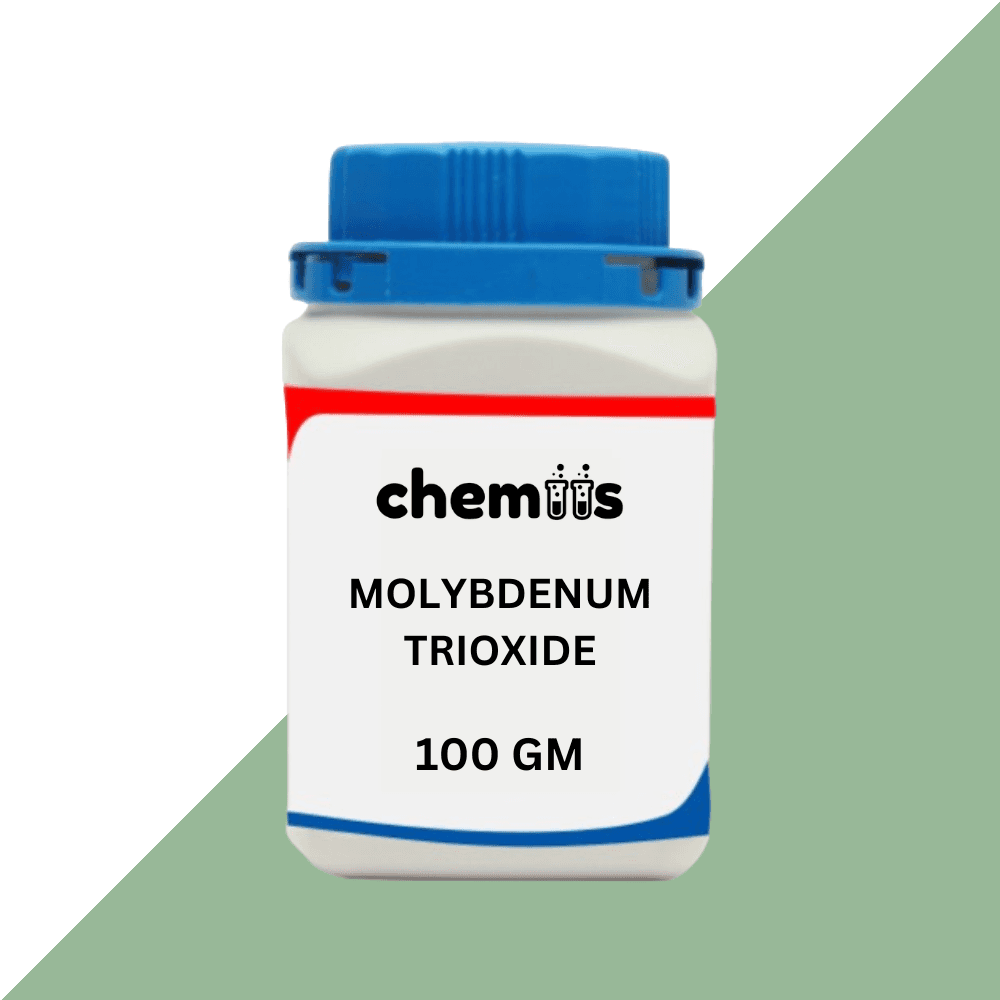

Molybdenum Trioxide (MoO₃) is a chemical compound composed of molybdenum and oxygen, typically in the form of a pale yellow or white powder. MoO₃ is an important precursor in the production of molybdenum metal, molybdenum-based catalysts, and molybdenum alloys. It is a highly reactive compound and is utilized in a wide range of industrial and chemical applications, including in the manufacture of steel, electronics, and catalytic processes.
Molybdenum Trioxide is a key material in producing molybdenum compounds, including ammonium molybdate and molybdenum disulfide, both of which have crucial uses in various high-tech industries. Additionally, MoO₃’s high melting point and oxidizing properties make it valuable in catalytic converters and as a catalyst in several industrial chemical processes.
Applications of Molybdenum Trioxide (MoO₃)
- Catalysis in Chemical Reactions
- Molybdenum Trioxide is extensively used in the catalysis of chemical reactions, especially in processes such as the oxidation of hydrocarbons and the sulfurization of organic compounds.
- It is commonly used in the production of acrylonitrile and in processes for the hydrodesulfurization of petroleum products, where its oxidizing properties are particularly valuable.
- Production of Molybdenum Alloys
- MoO₃ is a precursor in the production of molybdenum metal, which is subsequently used in the manufacturing of high-strength alloys for applications in aerospace, nuclear reactors, and electronics.
- Molybdenum alloys are known for their corrosion resistance and high melting points, making them ideal for use in high-temperature applications.
- Molybdenum-Based Compounds
- Molybdenum Trioxide is utilized in the synthesis of several important molybdenum compounds, such as ammonium molybdate, which is used in fertilizers, and molybdenum disulfide, which is used as a lubricant and catalyst.
- These compounds have applications across industries such as agriculture, electronics, automotive, and petrochemical.
- Electronics and Semiconductors
- MoO₃ is used in the electronics industry as a precursor for molybdenum thin films. These thin films are crucial for solar cells, light-emitting diodes (LEDs), and semiconductor devices due to their electrical conductivity and thermal stability.
- Its use in thin-film transistors and solar panel manufacturing is particularly promising due to its low-cost and efficient production capabilities.
- Pigments and Dyes
- Molybdenum Trioxide is used in the production of molybdenum-based pigments, which are employed in ceramic glazes and paints.
- The yellow pigment produced from MoO₃ is highly valued in the paint industry for creating durable and high-performance coatings.
- Superconductors and Electrical Conductivity
- MoO₃ is investigated for its potential in superconductivity and electronic applications. The compound, when doped or combined with other elements, can exhibit superconductive properties at relatively higher temperatures compared to traditional superconductors.
- This makes it a material of interest for the development of high-efficiency electrical conductors and advanced electronic devices.
- Fuel Cells and Energy Storage
- Molybdenum Trioxide is explored in the field of fuel cells as a catalyst for hydrogen oxidation reactions.
- Its high catalytic efficiency helps improve the performance of hydrogen fuel cells, contributing to more efficient energy storage and conversion systems.
- Glass Industry
- MoO₃ is used in the glass industry for the production of specialty glasses, especially those requiring high thermal stability and resistance to corrosion.
- It is also utilized in the creation of optical glass and light-transmitting materials, where its refractive properties are essential.
- Research and Development
- MoO₃ is widely used in research to explore new chemical reactions, the development of molybdenum-based materials, and as a precursor in the synthesis of other molybdenum compounds.
- Researchers explore its properties to create new technologies in nanomaterials, energy production, and material sciences.
- Environmental and Pollution Control
- MoO₃ plays an essential role in environmental protection and pollution control. It is used in catalytic converters to reduce harmful emissions from vehicles, including nitrogen oxides and carbon monoxide.
- Its application in industrial smokestacks helps in controlling air pollution by removing toxic gases and particulates from exhaust systems.
Safety and Handling
- Personal Protective Equipment (PPE):
- Gloves: Always wear nitrile or rubber gloves when handling MoO₃ to avoid skin contact.
- Eye Protection: Use safety goggles or a face shield to protect eyes from dust or powder exposure.
- Respiratory Protection: Use a dust mask or respirator when handling MoO₃ powder to avoid inhalation of particles.
- Protective Clothing: Wear lab coats or protective aprons to protect clothing and skin from exposure.
- Handling:
- MoO₃ should be handled in a well-ventilated area to prevent inhalation of dust.
- When working with large quantities, use a fume hood to prevent exposure to fumes or airborne particles.
- Avoid direct contact with MoO₃ as it is a strong oxidizer and may react with other substances.
- Storage:
- Store Molybdenum Trioxide in airtight containers to protect it from moisture, as it may form molybdic acid when exposed to water.
- Keep it in a cool, dry environment away from oxidizing agents and flammable materials.
- Ensure the storage area is well-ventilated and free from sources of ignition.
- First Aid:
- Inhalation: If inhaled, move the individual to fresh air immediately. Seek medical attention if symptoms such as coughing or difficulty breathing occur.
- Skin Contact: Wash affected areas with soap and water. If irritation persists, seek medical attention.
- Eye Contact: Flush eyes with plenty of water for at least 15 minutes and seek medical attention if irritation persists.
- Ingestion: If swallowed, do not induce vomiting. Rinse the mouth with water and seek medical attention immediately.
- Hazards:
- Inhalation: May cause irritation to the respiratory tract. Prolonged exposure to dust may lead to respiratory issues.
- Skin Contact: Can cause irritation on prolonged contact.
- Fire Hazard: Molybdenum Trioxide is not flammable but may present a fire hazard if mixed with flammable substances.
Tanvi Purohit (verified owner) –
Very responsive team.
Mohit Bansal (verified owner) –
Neatly packed items.
Isha Roy (verified owner) –
On-time and well-packed.
Devika Pillai (verified owner) –
All items intact.
Alka Dey (verified owner) –
Just what I needed.
Tanya Shetty (verified owner) –
Received in perfect condition.
Reema Das (verified owner) –
Quality exceeded expectations.
Sneha Iyer (verified owner) –
Received in good time.
Snehal More (verified owner) –
Satisfied with the results.
Kripa Mehta (verified owner) –
Amazing value for money.