
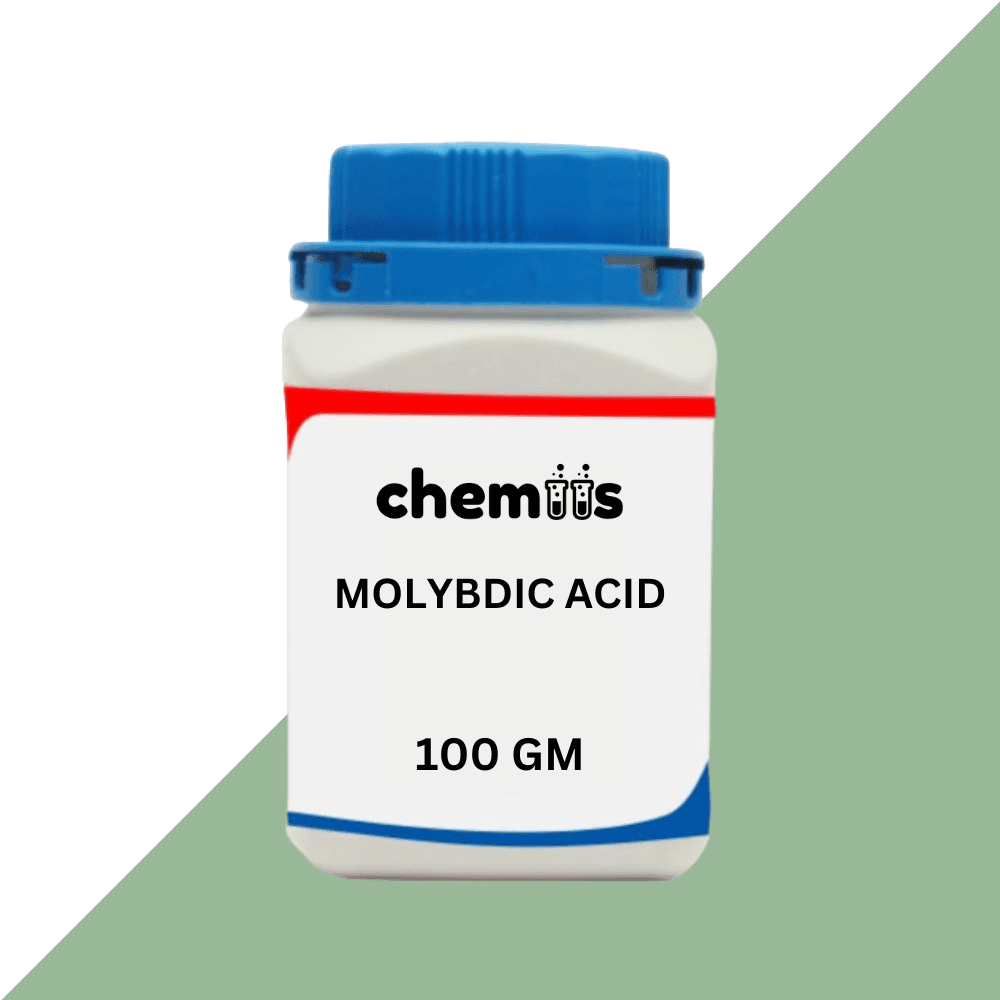
Molybdic acid is an inorganic compound with the chemical formula H₆MoO₆, commonly encountered as ammonium molybdate or molybdic acid powder in industrial and laboratory settings. It is primarily a precursor for the preparation of various molybdenum compounds and is commonly used in chemical analysis, electroplating, metal alloy production, and catalytic processes. Molybdic acid is a highly oxidizing agent and is essential in industrial catalysis and material science.
Molybdic acid can be obtained by dissolving molybdenum trioxide (MoO₃) in water. It plays a crucial role in the chemical, metallurgical, and electronics industries, where it is used as a catalyst, a corrosion inhibitor, and in the production of molybdenum-based alloys. It is also vital in fertilizers and pigments, further expanding its scope of applications.
Applications of Molybdic Acid
- Catalysis and Chemical Reactions
- Molybdic acid is extensively used as a catalyst in various chemical reactions, including oxidation reactions in the production of petrochemicals.
- It is crucial in the production of acrylonitrile (a key component in the manufacture of synthetic fibers), where its oxidizing properties are utilized for selective oxidation of propylene.
- Synthesis of Molybdenum-Based Compounds
- Molybdic acid is used in the synthesis of molybdenum compounds such as ammonium molybdate and molybdenum disulfide, which are vital in various industries, including agriculture, electronics, and lubrication.
- Ammonium molybdate derived from molybdic acid is essential for the production of fertilizers to supply molybdenum as a trace element for plant growth.
- Electroplating and Surface Coatings
- Molybdic acid is used in electroplating and surface coatings, where it is part of molybdenum-containing alloys that enhance the durability and corrosion resistance of materials.
- Molybdenum coatings are widely used in the aerospace, automotive, and electronics industries, as they provide high resistance to wear and high-temperature environments.
- Pigments and Dyes
- Molybdic acid serves as a precursor for producing molybdenum-based pigments like molybdate orange used in paints and ceramic glazes.
- These pigments are valued for their color stability and resistance to fading, making them suitable for use in architectural coatings, automotive paints, and decorative ceramics.
- Corrosion Inhibition
- Molybdic acid is utilized as a corrosion inhibitor in the oil and gas industry and in cooling systems to prevent the degradation of metal surfaces.
- It is especially effective in alkaline solutions where it forms insoluble molybdate salts that protect steel and other metals from rust and corrosion.
- Analytical Chemistry and Detection
- In analytical chemistry, molybdic acid is used to detect the presence of phosphates and arsenic in various samples.
- It is used in the molybdenum blue method, a test for the detection and quantification of phosphate ions, which is important in water treatment, fertilizer analysis, and environmental monitoring.
- Alloy Production
- Molybdic acid is a key component in the production of high-performance alloys that are essential in heavy industries such as aerospace, automotive, and construction.
- Molybdenum alloys provide strength, corrosion resistance, and thermal stability, making them ideal for extreme conditions such as high-temperature operations and high-stress environments.
- Fertilizers and Agricultural Applications
- Ammonium molybdate, derived from molybdic acid, is used in fertilizers as a trace element to improve plant health. Molybdenum is essential for nitrogen fixation in plants and is required in small amounts for enzyme activation and overall plant growth.
- Molybdic acid-based fertilizers are especially important for legumes and crops that need additional molybdenum for optimal growth.
- Production of Nanomaterials
- Molybdic acid plays a role in the development of nanomaterials, including molybdenum disulfide (MoS₂), which has applications in electronics and energy storage.
- MoS₂, a key material for supercapacitors, battery technology, and lubricants, is synthesized from molybdic acid in laboratory processes.
- Environmental Monitoring
- Molybdic acid is used in environmental monitoring to test for heavy metals and other contaminants in soil and water.
- Its application in phosphorus detection is critical in assessing water quality and managing eutrophication in bodies of water.
Safety and Handling
- Personal Protective Equipment (PPE):
- Gloves: Always wear nitrile or rubber gloves when handling molybdic acid to avoid skin contact.
- Eye Protection: Use safety goggles or a face shield to protect eyes from dust or accidental splashes.
- Respiratory Protection: Use a dust mask or respirator to avoid inhaling dust or fumes when handling the acid in powder or liquid form.
- Protective Clothing: Wear lab coats or protective aprons to protect skin and clothing.
- Handling:
- Molybdic acid should be handled with care as it is a strong oxidizing agent.
- Always work with it in a well-ventilated area or under a fume hood to avoid inhalation of dust or vapor.
- Avoid contact with metals or combustible materials that could react with the acid.
- Storage:
- Store molybdic acid in airtight containers to prevent contamination and degradation.
- Keep it in a cool, dry location away from flammable substances and reducing agents.
- Ensure storage containers are clearly labeled and kept away from strong acids and alkaline materials.
- First Aid:
- Inhalation: If inhaled, move the individual to fresh air immediately and seek medical attention if symptoms such as coughing or difficulty breathing persist.
- Skin Contact: Wash affected areas thoroughly with soap and water. If irritation persists, seek medical attention.
- Eye Contact: Flush eyes immediately with plenty of water for at least 15 minutes, ensuring that the eyes are held open. Seek medical attention.
- Ingestion: Do not induce vomiting. Rinse the mouth with water and seek immediate medical attention.
- Hazards:
- Inhalation: May cause respiratory irritation, especially in powder form.
- Skin Contact: Can cause irritation or burns on prolonged exposure.
- Eye Contact: Can cause irritation or burns to the eyes.
- Fire Hazard: Although molybdic acid itself is not flammable, it can increase the risk of fire in the presence of flammable materials.
10 reviews for MOLYBDIC ACID
There are no reviews yet.