
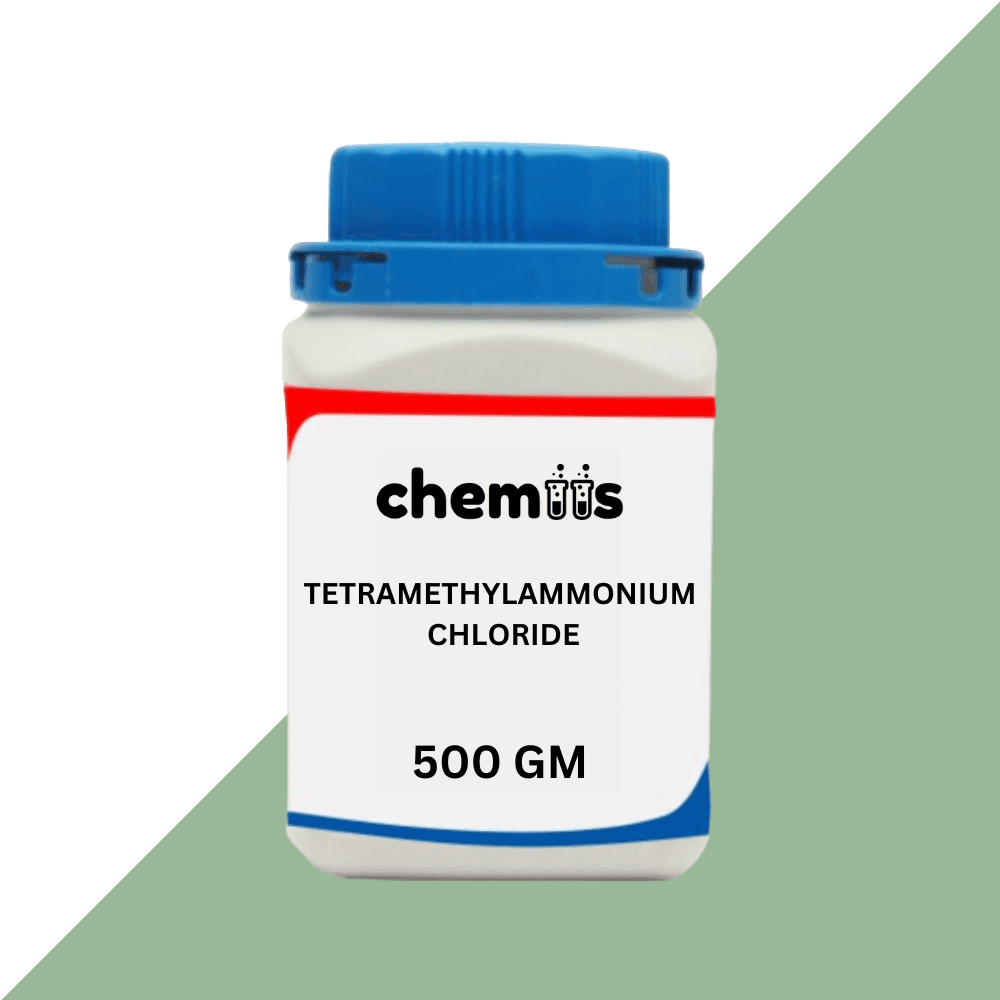
Tetramethylammonium Chloride (TMA chloride) is a quaternary ammonium compound widely used in organic synthesis, electrochemical applications, and as a reagent in chemical research. Known for its solubility in water and polar solvents, it serves as an essential intermediate in various chemical processes.
This compound is a white crystalline powder or granules that are stable under normal storage conditions. Its unique ionic properties and non-reactive nature in certain reactions make it a critical reagent in the synthesis of complex organic and inorganic compounds.
Applications of Tetramethylammonium Chloride
1. Chemical Synthesis:
- Phase Transfer Catalyst:
Acts as a phase-transfer catalyst, facilitating the transfer of ions across immiscible phases in organic synthesis. - Ion Pair Reagent:
Used in ion pair chromatography for the separation of ionic compounds by adjusting the mobile phase’s polarity. - Reagent in Organic Synthesis:
Plays a role in the preparation of quaternary ammonium salts, alkylation reactions, and ionic liquids.
2. Electrochemical Applications:
- Electrolyte in Batteries:
Used in the formulation of electrolytes for batteries and capacitors to enhance ion conductivity. - Conductivity Studies:
Serves as a reference compound for studying ionic conductivity and electrochemical behavior.
3. Pharmaceutical and Biotechnological Research:
- Protein Folding Studies:
Utilized in biochemistry to study protein folding mechanisms and interactions in aqueous solutions. - Reagent in Drug Synthesis:
An intermediate in the synthesis of certain pharmaceutical compounds and active ingredients.
4. Industrial Applications:
- Manufacture of Polymers:
Used in the synthesis of certain specialty polymers requiring quaternary ammonium groups. - Textile and Dyeing Industry:
Acts as a stabilizing agent in dyeing processes and enhances the interaction between dyes and fibers.
5. Laboratory Applications:
- Analytical Chemistry:
A reagent in titrations, ion-exchange processes, and chromatographic analysis. - Buffer Solutions:
Used to prepare buffer solutions for laboratory experiments requiring precise pH control.
Safety Guidelines for Handling Tetramethylammonium Chloride
Tetramethylammonium Chloride is generally stable but requires careful handling to prevent exposure risks.
1. General Handling Precautions:
- Personal Protective Equipment (PPE):
- Always wear gloves, safety goggles, and protective clothing to prevent skin and eye contact.
- Use a dust mask in environments with airborne particles.
- Avoid Inhalation:
Inhalation of fine particles may irritate the respiratory system. Work in a well-ventilated area or use fume hoods. - Avoid Skin Contact:
Prolonged or repeated contact may cause skin irritation. Wash exposed areas thoroughly with soap and water.
2. Storage Guidelines:
- Cool, Dry Environment:
Store in a tightly sealed container away from moisture, direct sunlight, and heat sources. - Segregation:
Keep away from incompatible substances such as strong oxidizing agents and acids. - Proper Labeling:
Ensure containers are clearly labeled and handled by trained personnel.
3. First Aid Measures:
- Eye Contact:
Rinse eyes thoroughly with plenty of water for at least 15 minutes. Seek medical attention if irritation persists. - Inhalation:
Move the affected individual to fresh air immediately. If symptoms such as coughing or shortness of breath occur, consult a physician. - Ingestion:
Rinse the mouth with water and seek immediate medical advice. Do not induce vomiting unless directed by medical personnel.
4. Spill and Waste Disposal:
- Containment and Cleanup:
Use inert materials such as sand or vermiculite to contain spills. Dispose of in accordance with local environmental regulations. - Environmental Safety:
Avoid releasing into waterways or soil. Follow proper waste disposal practices to prevent contamination.
Reviews
There are no reviews yet.