
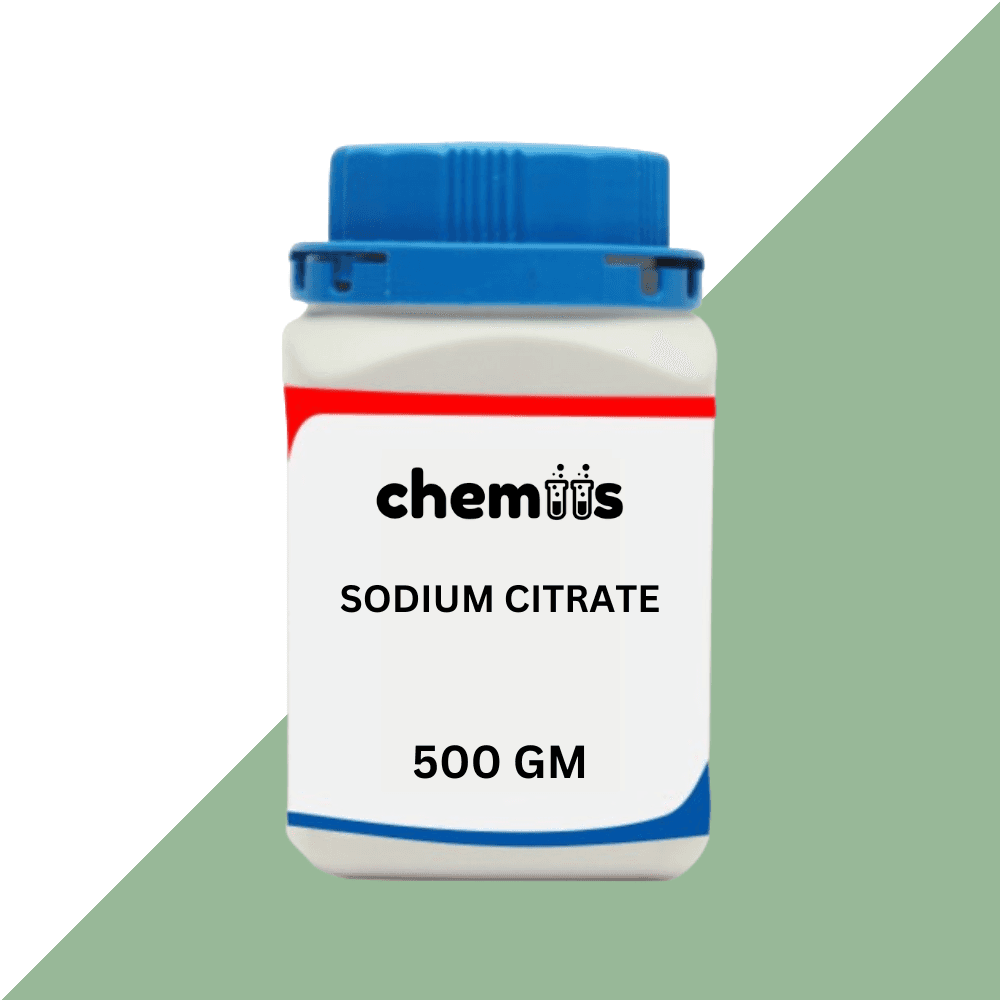
Sodium Citrate (Na₃C₆H₅O₇) is the sodium salt of citric acid, commonly used in various industries due to its versatile properties. It appears as a white, odorless powder or granules that are highly soluble in water. Sodium Citrate is primarily used as a buffering agent, preservative, emulsifier, and anticoagulant. It is widely used in food and beverage industries, pharmaceuticals, and medical applications, owing to its excellent properties.
Applications
1. Food and Beverage Industry
- Buffering Agent: Sodium Citrate is widely used as a pH regulator and buffering agent in various food and beverage products. It helps maintain the desired acidity or alkalinity levels, enhancing the stability and taste of the product.
- Preservative: Used in soft drinks, canned foods, and dairy products to prevent microbial growth, extending shelf life.
- Cheese Making: It is added in the production of processed cheese to improve texture, meltability, and prevent separation during cooking.
- Antioxidant: Sodium Citrate can act as an antioxidant in the preservation of food, preventing oxidative damage and maintaining flavor quality.
2. Pharmaceutical Industry
- Anticoagulant: Sodium Citrate is used in the formulation of anticoagulants for blood collection and in medical devices like dialysis machines. It prevents blood clotting by chelating calcium ions in the blood.
- pH Buffer in Medications: It is commonly used to control the pH of injectable solutions, making them safe for intravenous administration.
- Stabilizer: In pharmaceutical preparations, Sodium Citrate acts as a stabilizer for certain active ingredients, improving their effectiveness and shelf life.
3. Medical Uses
- Electrolyte Balance: Used to manage electrolyte balance in the body, particularly in rehydration solutions, and to treat metabolic acidosis in clinical settings.
- Treatment for Urinary Tract Infections (UTIs): Sodium Citrate is often used in medicinal solutions to alkalinize the urine and prevent kidney stones formation, and treat infections.
- Dialysis: It is used in dialysis solutions to prevent clotting and keep blood from clotting during treatment.
4. Laboratory and Analytical Chemistry
- Chelating Agent: Sodium Citrate is employed in analytical laboratories as a chelating agent to stabilize metal ions and prevent them from reacting in various chemical processes.
- Titration: It is used in chemical analyses such as titration for determining the concentration of certain acids and bases.
- Buffering Solutions: Sodium Citrate is utilized in buffer solutions for maintaining stable pH during experiments in chemical and biological studies.
5. Cosmetics and Personal Care
- pH Regulator: Used in cosmetics to adjust the pH of formulations such as shampoos, soaps, lotions, and facial cleansers, ensuring skin compatibility and product stability.
- Preservative: Acts as a preservative in cosmetic products to prevent bacterial and fungal growth, ensuring product safety and longevity.
Safety and Handling
Hazards:
- Non-Toxic: Sodium Citrate is generally considered safe for most applications, including food and pharmaceutical uses. However, it can cause irritation to eyes and mucous membranes in concentrated form.
- Inhalation: Prolonged exposure to dust may cause respiratory irritation, though it is typically non-harmful in low concentrations.
- Skin Contact: While not typically harmful, prolonged contact with concentrated Sodium Citrate can cause irritation.
Precautions:
- Personal Protective Equipment (PPE):
- Wear gloves, goggles, and protective clothing when handling Sodium Citrate in its powdered or concentrated form.
- Avoid inhaling dust by wearing a dust mask in environments where powdered Sodium Citrate is handled.
- Handling Guidelines:
- Use in well-ventilated areas to avoid inhalation of dust.
- Always follow specific handling instructions and regulatory safety guidelines when dealing with food-grade, pharmaceutical, or industrial-grade Sodium Citrate.
- Storage:
- Store in a tightly sealed container in a cool, dry place to prevent exposure to moisture, which may cause it to absorb water and degrade.
- Keep away from strong acids or bases.
First Aid Measures:
- Inhalation: Move to an area with fresh air immediately. If symptoms persist, seek medical attention.
- Skin Contact: Wash skin thoroughly with soap and water. If irritation persists, seek medical advice.
- Eye Contact: Rinse eyes immediately with plenty of water for at least 15 minutes. If irritation continues, seek medical help.
- Ingestion: If swallowed, rinse the mouth with water. Drink water to dilute the substance. If large amounts are ingested, seek medical attention immediately.
Disposal:
- Sodium Citrate is generally safe for disposal in household waste but should be discarded according to local environmental regulations. Avoid release into water systems or sewage.


Aman Sheikh (verified owner) –
Good service.
Parth Joshi (verified owner) –
Delivered safely and quickly.
Aarav Mehta (verified owner) –
Will recommend to others.
Uday Thakur (verified owner) –
Great customer support.
Kanika Luthra (verified owner) –
The product is firmly packed.
Amarjeet Singh (verified owner) –
Reliable supplier.
Isha Roy (verified owner) –
Very responsive team.
Kanika Luthra (verified owner) –
Simple checkout process.
Suraj Barman (verified owner) –
Arrived earlier than expected.
Akash Tripathi (verified owner) –
Excellent shipping speed.