
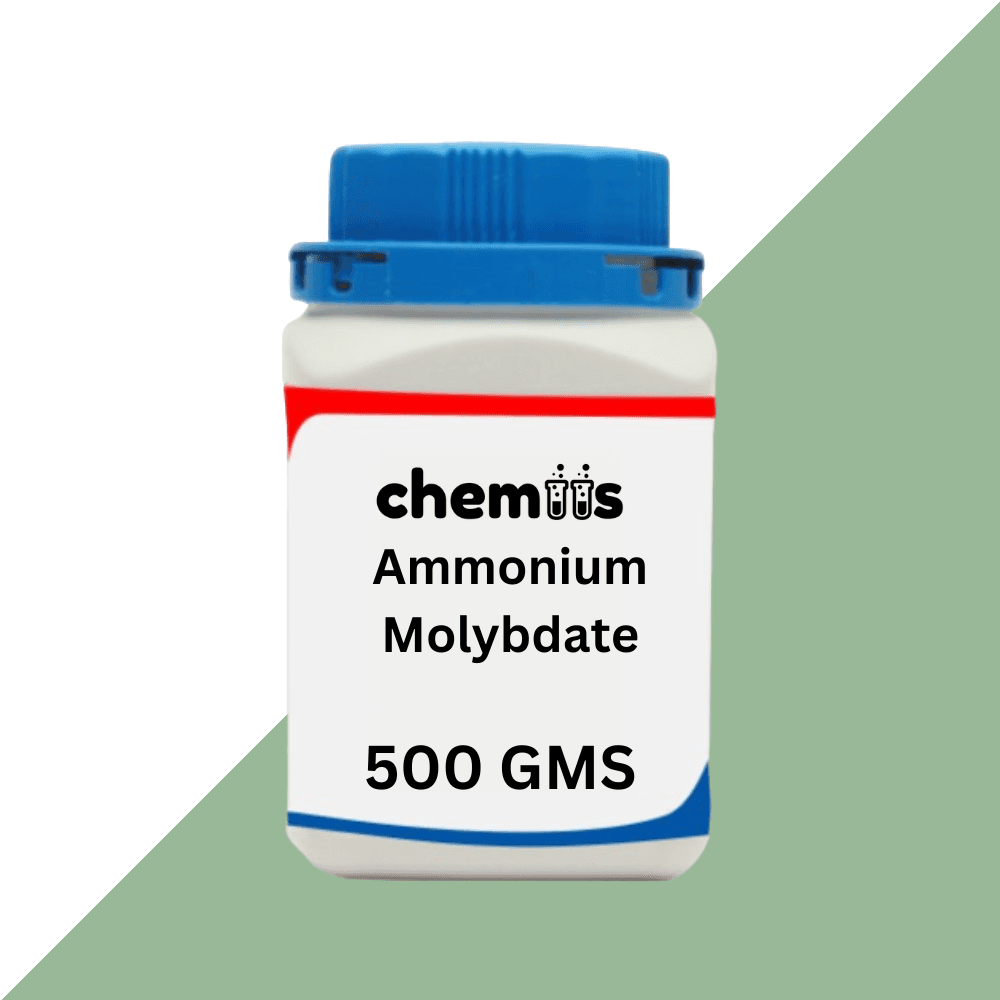


Ammonium Molybdate, often referred to as Ammonium Heptamolybdate, is an inorganic compound that typically appears as a white crystalline powder or colorless crystals. It is highly soluble in water and forms a clear, slightly acidic solution. Ammonium Molybdate is widely used in various industrial, agricultural, and laboratory applications due to its role as a source of molybdenum.
Applications
- Agriculture: Used as a micronutrient in fertilizers to supply molybdenum, which is essential for plant growth, especially in legumes.
- Catalysts: Employed as a precursor in the manufacture of catalysts used in the petroleum industry and in chemical synthesis.
- Analytical Chemistry: Used as a reagent for the analysis of phosphates, silicates, and arsenates in laboratory settings.
- Metal Treatment: Applied in metal finishing processes, including electroplating and corrosion inhibition.
- Pigment Manufacturing: Utilized in the production of pigments and dyes, particularly for ceramics and glass.
Handling and Storage
- Handling:
- Handle with care, using protective equipment such as gloves, goggles, and appropriate clothing to prevent skin and eye contact.
- Work in a well-ventilated area to avoid inhalation of dust.
- Avoid ingestion and ensure proper hygiene by washing hands thoroughly after handling.
- Ammonium Molybdate is toxic if ingested, and prolonged exposure can lead to molybdenosis, so take appropriate safety precautions.
- Storage:
- Store in a cool, dry, and well-ventilated area away from incompatible substances such as strong acids and oxidizing agents.
- Keep the container tightly closed when not in use to prevent moisture absorption and contamination.
- Store in corrosion-resistant containers to avoid chemical reactions.
- Ensure that storage areas are properly labeled and restricted to trained personnel.

45 reviews for Ammonium Molybdate
There are no reviews yet.