
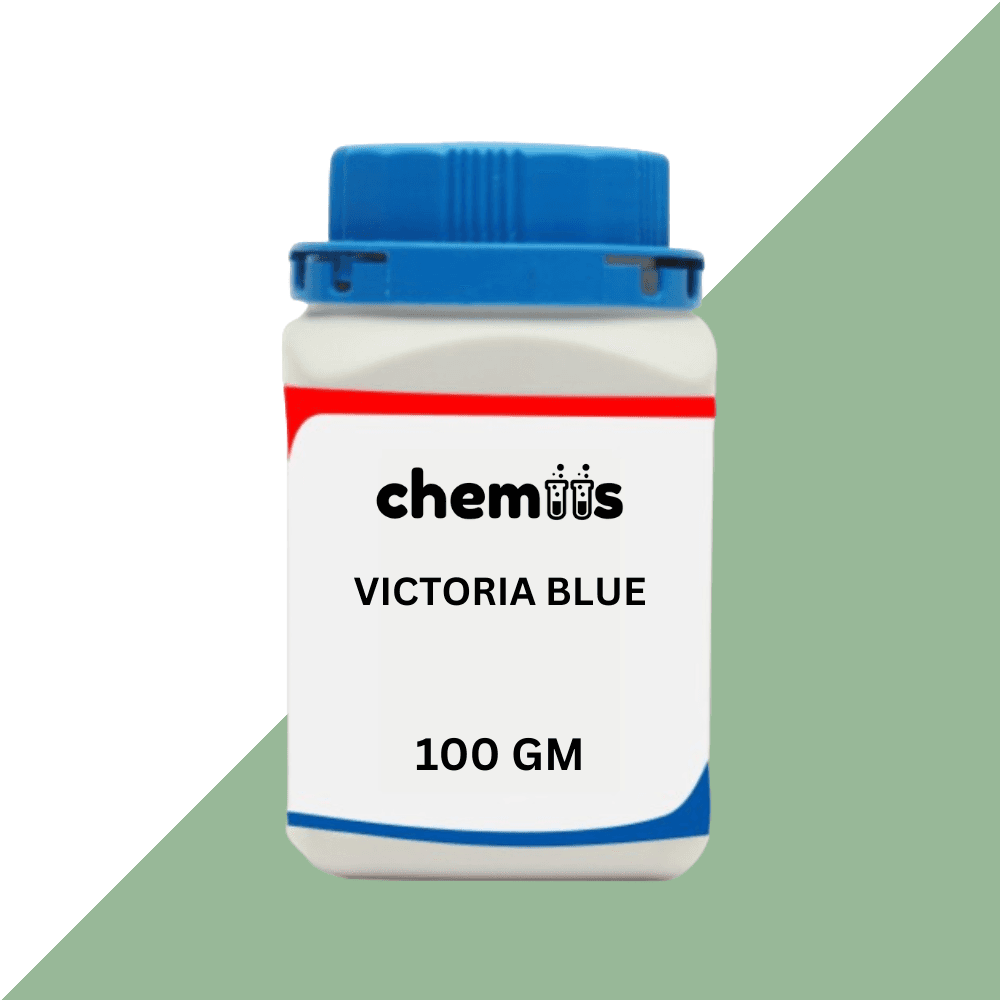

Victoria Blue is a synthetic dye commonly used in the textile and biological sectors. It is known for its vibrant blue color and is widely utilized in a range of applications, including as a dye for fabrics and as a biological stain in laboratory settings. As a member of the triarylmethane class of dyes, Victoria Blue has excellent colorfastness and can be used in various industrial and laboratory processes. It is an essential chemical in the dye and laboratory reagent industries, offering versatility in different sectors
Applications of VICTORIA BLUE
1. Textile and Dyeing Industry
- Textile Dyeing:
Victoria Blue is frequently used in the textile industry as a dye for various fabrics, particularly for wool, silk, and synthetic fibers. It imparts a rich blue color to fabrics and offers good colorfastness, making it ideal for applications where durability is important. - Leather Dyes:
In addition to textiles, Victoria Blue can also be used to dye leather and other similar materials. Its deep blue hue makes it popular for use in fashion and accessory products.
2. Biological and Laboratory Applications
- Biological Staining:
Victoria Blue is widely used as a biological stain in laboratories. It is often employed in histology and microbiology to stain cellular components, enabling easier observation under a microscope. It is used for staining tissues in animal and plant specimens, making them visible during microscopic analysis. - Bacteriological Applications:
In microbiology, Victoria Blue is used to stain bacterial samples. This allows for clearer visualization of bacterial cells in various diagnostic procedures. - Histopathology:
The dye is useful in histopathology, where it helps in the examination of tissues for abnormalities. It is part of a group of dyes that help differentiate different structures and components of cells and tissues.
3. Industrial Applications
- Ink and Printing:
Victoria Blue can be used in the formulation of inks, particularly for printing purposes where a bright and durable blue color is desired. It is used in both offset and flexographic printing processes. - Cosmetics and Personal Care Products:
In some formulations, such as eye makeup and other cosmetic products, Victoria Blue can be used for its striking colorant properties. However, it must meet strict safety regulations in these applications. - Plastic Coloring:
The dye is used in the plastic industry to color plastics, particularly in applications where a rich, deep blue color is needed.
4. Analytical Applications
- pH Indicator:
Victoria Blue has been used in some cases as a pH indicator due to its color-changing properties in response to different pH levels, although it is not as common as other pH indicators.
Safety Guidelines for Handling VICTORIA BLUE
1. Hazards
- Health Hazards:
Victoria Blue, like many synthetic dyes, may pose health risks if improperly handled. It can cause irritation to the skin, eyes, and respiratory system upon prolonged exposure. Care should be taken to avoid contact with the skin and eyes, and inhaling dust or fumes should be avoided. - Toxicity:
While generally considered low toxicity, ingestion of Victoria Blue in significant amounts could lead to gastrointestinal distress. It is advisable not to ingest or inhale any amounts of the product.
2. Personal Protective Equipment (PPE)
- Respiratory Protection:
Use a dust mask or respirator when handling dry Victoria Blue powder to prevent inhalation of fine particles. In environments with high dust levels, a NIOSH-approved respirator may be required. - Gloves:
Wear chemical-resistant gloves (e.g., nitrile or latex) to prevent direct skin contact with the dye, as it may cause skin irritation or staining. - Eye Protection:
Always wear safety goggles or face protection when working with Victoria Blue to prevent any accidental splashes into the eyes.
3. Handling and Storage
- Handling Instructions:
Victoria Blue should be handled in well-ventilated areas to avoid inhalation of dust or fumes. Avoid generating dust by using appropriate containers and equipment when transferring the dye. When using it in liquid form, ensure that the containers are tightly sealed to avoid spills or contamination. - Storage Conditions:
Store Victoria Blue in a cool, dry, and well-ventilated area, away from direct sunlight and heat sources. It should be kept in tightly closed containers to prevent moisture absorption, which could degrade the quality of the dye. - Packaging:
The dye should be stored in containers that are clearly labeled with appropriate handling and safety instructions. Packaging should be robust to prevent accidental leakage or contamination.
4. Spill and Leak Management
- Spill Response:
In case of a spill, wear the appropriate protective equipment (PPE). Use absorbent materials such as sand, vermiculite, or activated carbon to contain and clean up the spill. Avoid generating dust, and clean up promptly to prevent environmental contamination. - Waste Disposal:
Dispose of any Victoria Blue waste according to local environmental regulations. As a synthetic dye, it is considered hazardous waste and should not be poured down drains or disposed of in regular trash.
5. First Aid Measures
- Skin Contact:
If Victoria Blue comes into contact with the skin, wash the area with soap and water immediately. If irritation persists, seek medical attention. - Eye Contact:
In case of eye contact, immediately flush the eyes with plenty of water for at least 15 minutes while holding the eyelids open. Seek medical attention if irritation persists. - Inhalation:
If inhaled, move the person to fresh air immediately. If symptoms such as coughing, difficulty breathing, or dizziness occur, seek medical attention. - Ingestion:
If ingested, do not induce vomiting. Rinse the mouth with water and seek medical attention immediately. Do not attempt to treat the condition yourself without professional guidance.

Shruti Bhandari (verified owner) –
Bulk order handled perfectly.
Ankur Tyagi (verified owner) –
Great for bulk purchase.
Ankur Tyagi (verified owner) –
Repeat customer, always happy.
Avni Kapoor (verified owner) –
No complaints at all.
Rohan Gupta (verified owner) –
All items intact.
Uday Thakur (verified owner) –
Five-star experience.
Deeksha Iyer (verified owner) –
Delivered in good condition.
Asha Fernandes (verified owner) –
Affordable and effective.
Kavita Nair (verified owner) –
Bulk order handled perfectly.
Payal Kamat (verified owner) –
Product matches the description.