
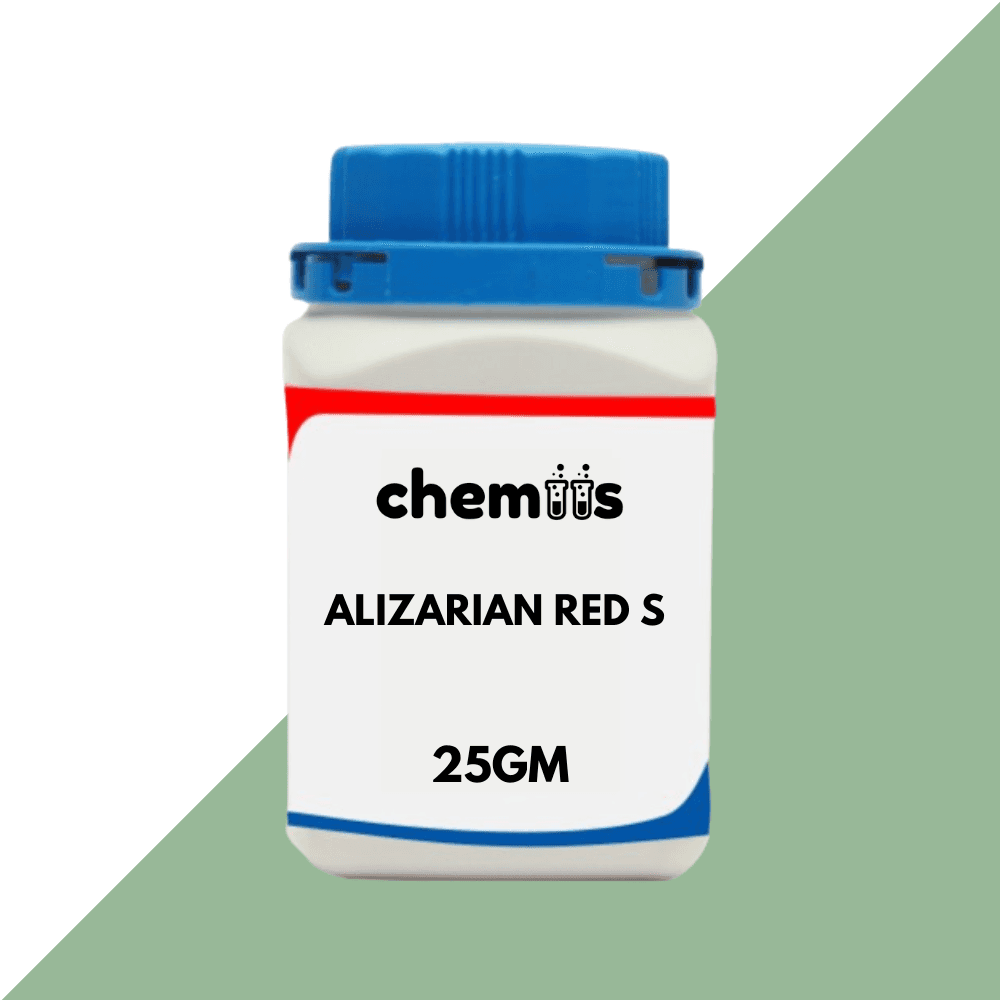
Alizarin Red is a synthetic dye known for its vibrant red color. It is derived from alizarin, a natural dye obtained from the madder plant (Rubia tinctorum), and is used in various applications including staining, coloring, and as a pH indicator. In its pure form, Alizarin Red appears as a red to reddish-brown powder.
Application:
Alizarin Red has several uses across different fields:
- Histology and Cytology: Used as a staining agent for biological tissues and cells. It helps in differentiating various cell types and tissue structures under a microscope.
- Chemical and Industrial Applications: Employed as a colorant in products such as inks, paints, and textiles.
- pH Indicator: Acts as a pH indicator, changing color based on the acidity or alkalinity of a solution. It is commonly used in laboratory experiments to determine pH levels.
- Dyeing: Used in the dyeing of fabrics and other materials, providing a bright red color.
Handling:
- Personal Protection: Use standard PPE, including gloves, safety goggles, and a dust mask or respirator to avoid inhalation of dust.
- Ventilation: Handle in a well-ventilated area or use local exhaust ventilation to minimize dust exposure.
- Hygiene: Avoid contact with eyes, skin, and clothing. Wash hands thoroughly after handling to prevent accidental ingestion or irritation.
Storage:
- Conditions: Store in a cool, dry place, away from moisture and direct sunlight. Keep containers tightly sealed to prevent contamination and degradation of the dye.
- Labeling: Clearly label all containers with the chemical name and appropriate hazard information.
- Disposal: Dispose of in accordance with local, regional, and national regulations. Alizarin Red is generally considered non-hazardous, but check local guidelines for specific disposal procedures.
Safety Notes:
Alizarin Red is generally safe when handled with care, but it can cause irritation to the skin, eyes, and respiratory tract if exposed to dust. It is important to follow proper safety procedures to minimize risks. For detailed safety and handling instructions, always refer to the Material Safety Data Sheet (MSDS) or Safety Data Sheet (SDS) associated with the chemical.
45 reviews for Alizarin Red
There are no reviews yet.