
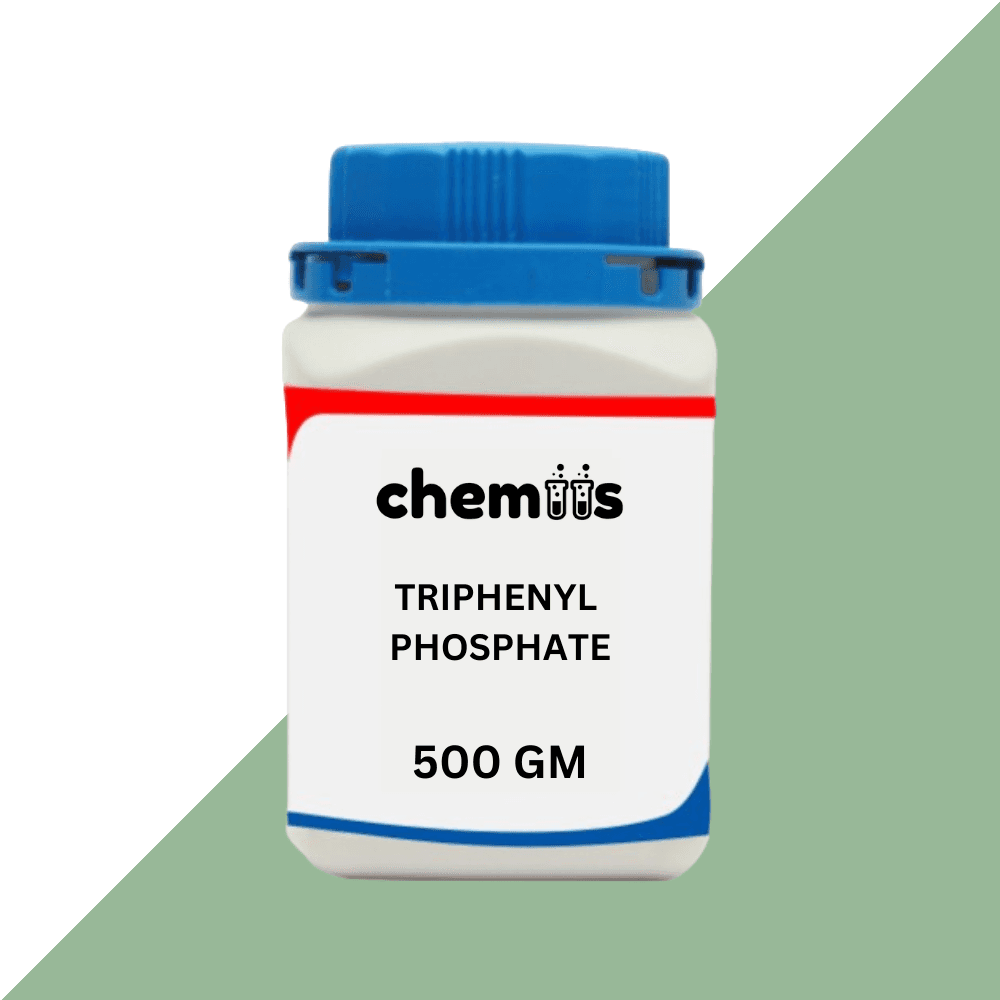

Triphenyl Phosphate (TPP) is a crystalline, colorless solid with versatile applications in industrial and consumer products. Known for its flame-retardant properties and effectiveness as a plasticizer, TPP plays a crucial role in enhancing the safety and performance of polymers, resins, and coatings. It also finds use in lubricants, electrical applications, and solvents.
Applications of Triphenyl Phosphate
1. Flame Retardant
- Polymers and Plastics:
Widely used in the production of flame-resistant materials such as polycarbonate, acrylonitrile-butadiene-styrene (ABS), and phenolic resins. - Textiles and Coatings:
Incorporated into fabrics and coatings to reduce flammability in industrial and consumer products.
2. Plasticizer
- Polymer Modification:
TPP acts as a plasticizer, improving flexibility, durability, and workability in materials such as cellulose acetate and vinyl resins.
3. Lubricants and Hydraulic Fluids
- High-Temperature Stability:
Used in lubricants and hydraulic fluids to enhance thermal stability and reduce wear in machinery and equipment.
4. Solvent for Chemical Reactions
- Intermediate for Synthesis:
Acts as a solvent or intermediate in the synthesis of specialized chemicals and formulations.
5. Electrical and Electronic Applications
- Dielectric Fluids:
Provides insulation and enhances fire resistance in electrical applications such as capacitors and transformers.
6. Analytical Chemistry
- Reagent:
Employed in laboratory settings for various analytical and chemical synthesis purposes.
Safety Guidelines for Handling Triphenyl Phosphate
1. Hazards
- Health Risks:
- May cause skin and eye irritation upon contact.
- Inhalation of dust or fumes can lead to respiratory discomfort.
- Prolonged exposure may affect the nervous system and liver.
- Environmental Risks:
- Toxic to aquatic life with long-lasting effects; avoid release into waterways.
2. Personal Protective Equipment (PPE)
- Gloves:
Use chemical-resistant gloves like nitrile or neoprene. - Eye Protection:
Wear safety goggles to prevent eye irritation. - Clothing:
Use protective clothing to avoid skin exposure. - Respiratory Protection:
Use a dust mask or respirator when handling powdered forms or in poorly ventilated areas.
3. Handling and Storage
- Store in a cool, dry, and well-ventilated area.
- Keep away from strong oxidizing agents and moisture.
- Use in a fume hood or well-ventilated space to avoid dust and vapor buildup.
4. Spill and Leak Management
- Sweep up spills carefully to avoid generating dust.
- Place material in a labeled, sealed container for proper disposal.
- Prevent entry into drains or waterways.
5. First Aid Measures
- Skin Contact: Wash with soap and water immediately. Seek medical advice if irritation persists.
- Eye Contact: Flush eyes with plenty of water for at least 15 minutes. Seek medical attention.
- Inhalation: Move to fresh air. Provide artificial respiration or oxygen if necessary and consult a physician.
- Ingestion: Do not induce vomiting. Rinse the mouth and seek immediate medical assistance.
6. Fire Safety
- Fire Hazards:
Triphenyl Phosphate is flammable. Emits toxic fumes when burned. - Extinguishing Media:
Use foam, carbon dioxide, dry chemical, or water spray. Avoid high-pressure water jets that may spread the fire.
20 reviews for TRIPHENYL PHOSPHATE
There are no reviews yet.