
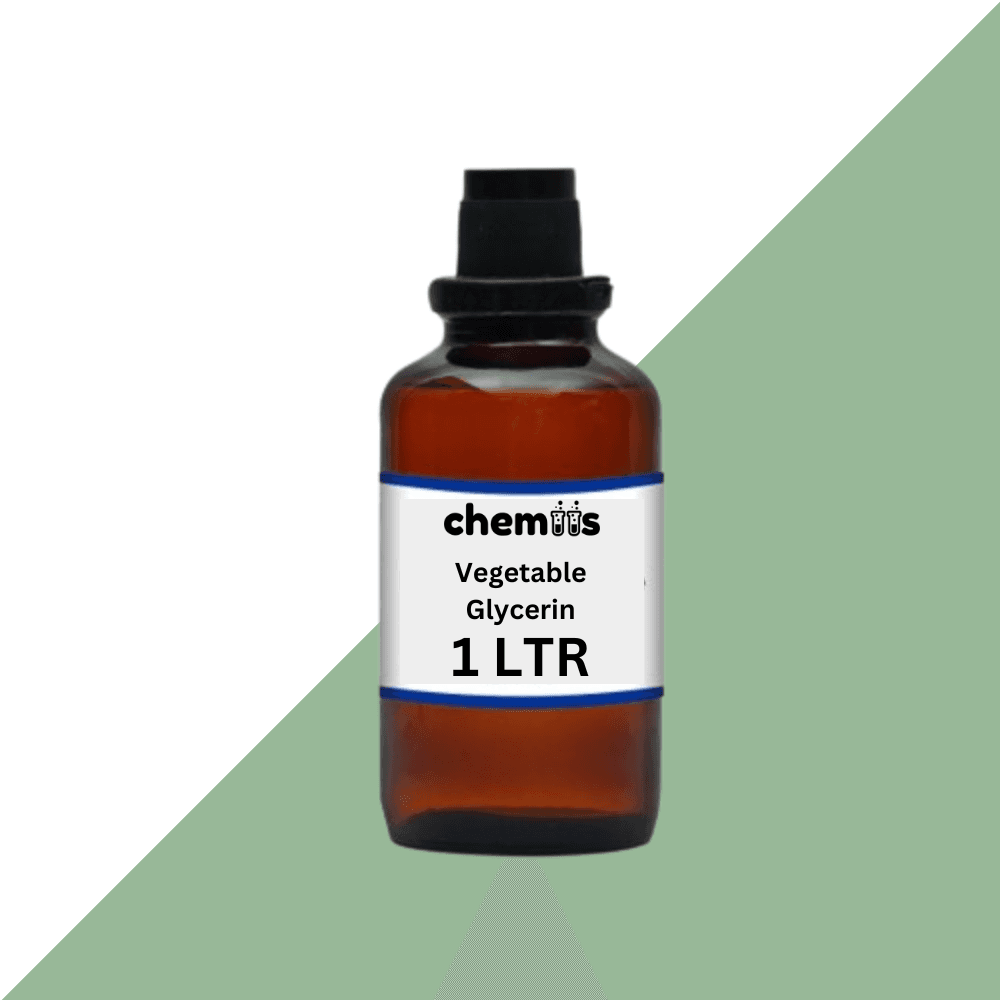
Vegetable Glycerin, also known as glycerol or glycerine, is a colorless, odorless, and viscous liquid that is derived from plant oils, typically palm, soy, or coconut oil. It is widely used in the food, pharmaceutical, and cosmetic industries due to its humectant, sweetening, and moisturizing properties. Vegetable Glycerin is a non-toxic, water-soluble substance with a slightly sweet taste, making it ideal for a range of applications.
Applications:
- Food and Beverage Industry: Used as a sweetener, humectant, and preservative in foods and beverages, including baked goods, dairy products, and processed foods.
- Pharmaceuticals: Acts as a solvent, humectant, and emollient in medicinal formulations such as syrups, creams, and ointments.
- Cosmetics and Personal Care: A common ingredient in lotions, soaps, shampoos, and other skincare products for its moisturizing properties.
- E-liquids: Used in the formulation of e-cigarette liquids as a base ingredient.
- Other Uses: Employed in the production of herbal extracts, as a lubricant in machinery, and as a plasticizer in flexible packaging.
Handling and Storage:
- Handling: Ensure good ventilation when handling large quantities. Avoid contact with eyes, skin, and clothing. Wear appropriate protective clothing, gloves, and eye protection. Vegetable Glycerin is generally regarded as safe (GRAS) but should be handled carefully to avoid slips due to its viscous nature.
- Storage: Store in tightly closed containers in a cool, dry, and well-ventilated area away from direct sunlight and heat sources. It should be kept away from incompatible materials such as strong oxidizing agents. Avoid freezing conditions, as the substance becomes more viscous at low temperatures.

60 reviews for Vegetable Glycerin
There are no reviews yet.